
We’re always around invisible energy. This comes from power lines, wiring in our homes, and devices like phones and laptops. It’s called electromagnetic fields.
Did you know we’re exposed to more electromagnetic radiation now than ever? With more tech use, many wonder, “Are electromagnetic fields safe?”
As we live with this invisible energy, we might worry about its health effects. In this guide, we’ll look at the science of electromagnetic fields. We’ll talk about where they come from, what experts say, and how to protect ourselves.
Key Takeaways
- Understanding the sources of electromagnetic fields in our daily lives.
- Exploring the science behind electromagnetic fields and their possible health effects.
- Expert opinions on the safety of electromagnetic fields.
- Practical tips for reducing exposure to electromagnetic fields.
- Ways to keep yourself and your loved ones safe from these risks.
The Invisible Energy All Around Us
We’re always surrounded by electromagnetic fields (EMFs). This invisible energy is everywhere in our lives. We get exposed to EMFs from many things, like home appliances and phones.
Our Daily Exposure to Electromagnetic Fields
We meet EMFs every day, at home, work, and outside. Things like microwave ovens, Wi-Fi routers, and smartphones are sources. Knowing how much we’re exposed is key to understanding health risks.
Even our home wiring and appliances send out EMFs. As we use more tech, our EMF exposure increases.
The Growing Concern About EMF Safety
Many are worried about EMF safety. Studies are looking into how EMFs might affect our health. This worry is making people try to reduce their emf hazards.
It’s important to keep up with new research on emf exposure safety. This helps us make informed choices.
What Exactly Are Electromagnetic Fields?
As we live in a world filled with electricity, knowing about electromagnetic fields is key. Electromagnetic fields (EMFs) are invisible areas of energy made by electricity. They surround many devices and wires. These fields are everywhere, touching our lives every day.
Defining EMFs: The Science Behind the Invisible Energy
EMFs happen when electric current flows through wires or devices. It’s about how electric and magnetic forces work together. When electric current flows, it makes a magnetic field. This creates an electromagnetic field.
The Electromagnetic Spectrum Explained
The electromagnetic spectrum is huge. It includes all kinds of electromagnetic radiation. Non-ionizing radiation comes from things like power lines and phones. Ionizing radiation is from UV light and X-rays. Knowing this helps us understand the risks of different EMFs.
| Radiation Type | Examples of Sources |
|---|---|
| Non-Ionizing | Power lines, Wi-Fi routers, mobile phones, microwaves |
| Ionizing | UV light, X-rays, gamma rays |
Ionizing vs. Non-Ionizing Radiation: Key Differences
Ionizing and non-ionizing radiation are different. Ionizing radiation can hurt our cells and DNA. This can lead to serious health problems like cancer. Non-ionizing radiation is safer, but its effects are being studied.
Common Sources of EMF in Modern Life
Electromagnetic fields (EMFs) are everywhere in our world today. They come from nature and from things made by humans. It’s important to know where EMFs come from, how they might affect our health, and how to stay safe.
Natural EMF Sources: Earth’s Magnetic Field and Sunlight
Many think EMFs only come from technology, but nature has its own sources, too. The Earth’s magnetic field helps animals find their way. Sunlight also sends out EMFs, like visible light, UV, and IR radiation. These are usually safe for us.
Household EMF Emitters: From Wiring to Appliances
Our homes are full of EMF sources, mainly from wiring and appliances. Things like refrigerators and microwaves send out EMFs. But these EMFs get weaker as you move further away.
Keeping a distance from these devices can help lower your EMF exposure.
Digital Technology and Wireless EMF Sources
Today, technology is a big source of EMFs. Smartphones and Wi-Fi routers send out EMFs, too. This has created more RF EMFs in our world.
Knowing about these EMFs helps us find ways to protect ourselves. We can learn to reduce our exposure to EMFs from technology and appliances.
👉 Explore it here: https://emfshield.com/products/emf-defense-shield-for-phone-and-electronics-v2-1-2#aff=HealingHavenOasis
The Science Behind EMF and Health Effects
Understanding how electromagnetic fields (EMFs) affect our health is complex. We are surrounded by devices that send out EMFs, like phones and appliances. It’s key to know the science behind their health effects.
How EMFs Interact with Human Biology
The human body has systems that can be changed by EMFs. Research shows EMFs can affect our electrical and nervous systems. For example, they can change how our heart beats.
EMFs can also mess with our body’s natural signals. These signals help our cells talk to each other and work properly.
Studies say EMFs can change how our bodies work. But how much and what it means is not fully known. Our body’s reaction to EMFs can differ based on many factors.
Current Research Findings on EMF Exposure
Recent studies on EMF exposure have given mixed results. Some studies link long-term EMF exposure to health problems. But other studies found no link, showing it’s hard to say for sure.
More research is needed to understand EMF and health. Scientists are looking into how different EMFs affect us. They also want to know how EMFs might change our biology. As we learn more, health rules and safety standards will need to change.
Potential Health Concerns Associated with EMF Exposure
Our world is getting more electrified, and worries about EMF health effects are growing. Technology use has increased EMF emissions. This raises questions about their health impacts. We’ll look at what we know about these concerns and their short and long-term effects.
Short-Term Effects of EMF Exposure
Studies on EMF’s short-term effects show mixed results. High exposure might cause headaches, fatigue, and sleep issues. People near power lines or using certain devices might feel these effects. But scientists are not yet sure if EMF really causes these problems.
- Headaches and migraines
- Fatigue and sleep disturbances
- Dizziness and concentration problems
These symptoms happen with high exposure. But we need more research to know if EMF really causes them.
Long-Term Health Implications Under Investigation
Long-term EMF health effects are being studied. Some research links EMF to health problems like cancer and neurological issues. But the evidence is not strong yet. More research is needed to understand these risks.
Vulnerable Populations: Who May Be More Susceptible
Some groups might be more affected by EMF. This includes children and pregnant women. They might be more sensitive to EMF. It’s important to protect these groups.
Looking into EMF health concerns helps us understand the need for more research. As we learn more, we can make our environment safer and healthier for everyone.
The EMF Controversy: Expert Opinions and Recent Developments
Research on electromagnetic fields (EMFs) is growing. This makes the safety debate more complex. Some experts say we should be careful with EMFs. Others say there’s no clear proof they’re harmful.
Scientific Consensus vs. Precautionary Approaches
There’s a big debate on EMFs. Some say we should follow safe exposure levels. Others say we should be careful even if we’re not sure.
The World Health Organization (WHO) has guidelines for EMF exposure. They say we need to keep checking these guidelines as new research comes out. Some people think we should be extra careful with EMFs, even if we’re not sure about the risks.
“The precautionary principle is not just about avoiding harm; it’s about being proactive in the face of uncertainty.”
This debate shows how complex EMFs are. We need more research to understand their health effects.
Industry Positions and Independent Research Findings
Industry groups and independent researchers have different views on EMFs. Industry groups say there’s no clear proof of harm. They think current safety rules are enough.
But some independent researchers worry about health risks. They say we need more studies. For example, a study found some health problems linked to long-term EMF exposure. But the study wasn’t sure if EMFs caused these problems.
Understanding the EMF debate is important. We need to look at all sides of the argument. This helps us make smart choices about EMF exposure.
👉 Explore it here: https://emfshield.com/products/emf-defense-shield-for-phone-and-electronics-v2-1-2#aff=HealingHavenOasis
5G Technology and EMF: What You Need to Know
As we get into the latest wireless tech, it’s key to know how 5G affects our EMF exposure. 5G changes how we talk and get info, but it also makes us wonder about our health.
5G is different from before because it uses higher frequencies and more small cell antennas. This has made people and health experts worry.
Differences in 5G Technology
5G works on a wider range of frequencies than before. This means it’s faster but also has a shorter range. It can get blocked by things like walls.
To fix this, 5G uses lots of small cells in cities. This makes people worry about being near more EMF.
Current Research on 5G EMF Exposure
Scientists are studying how 5G affects our health. They look at how the new tech might change our exposure to EMF. They’re checking if the denser 5G network is a problem.
| Aspect | 4G | 5G |
|---|---|---|
| Frequency Range | Up to 2.6 GHz | Up to 86 GHz |
| Infrastructure | Fewer, larger cell towers | Many small cell antennas |
| Data Transfer Rate | Slower | Faster |
As studies grow, it’s important to keep up with the news. Knowing the differences between 5G and old tech helps us understand EMF better in the 5G world.
EMF Measurement: Understanding Your Exposure Levels
As we live in a world full of connections, knowing our EMF levels is key to staying healthy. To manage our exposure to electromagnetic fields, we must first learn how to measure them. Each type of EMF needs a different way to measure it, and having the right tools is important.
Units of Measurement for Different EMF Types
EMFs are measured in different ways based on their frequency. For electric and magnetic fields, we use microteslas (μT) and gauss (G) for magnetic fields. We also use volts per meter (V/m) for electric fields. Knowing these units helps us understand our measurements and compare them to safety standards.
For example, extremely low-frequency (ELF) fields, like those from household appliances, are usually measured in μT or mG.
| EMF Type | Common Measurement Units | Typical Sources |
|---|---|---|
| Low-Frequency Magnetic Fields | μT, mG | Household appliances, wiring |
| Radiofrequency (RF) Fields | μW/cm, V/m | Cell phones, Wi-Fi routers, microwave ovens |
| Electric Fields | V/m | Power lines, household wiring |
Tools and Methods for Measuring EMF in Your Environment
To measure EMF levels, we have many tools. From simple handheld Gaussmeters for low-frequency fields to spectrum analyzers for radiofrequency fields. It’s important to pick the right tool for the EMF you’re measuring.
Also, knowing how to use these tools is key to getting accurate readings.
For those worried about EMF exposure, these tools offer valuable insights. They help us find sources of high EMF and take steps to reduce exposure. Whether it’s moving devices or using shielding materials, knowing your EMF levels is the first step to a safer space.
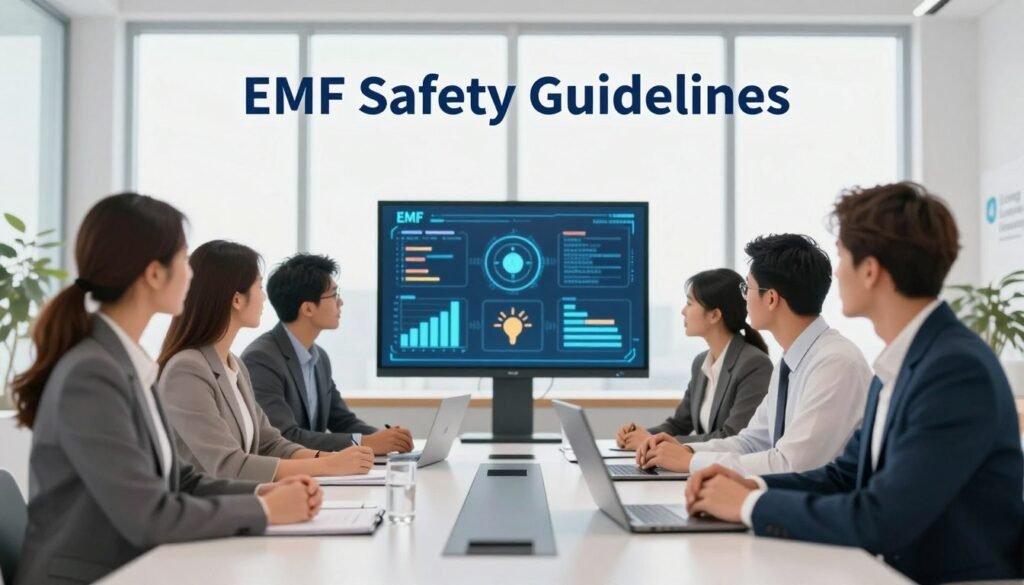
International Standards and Safety Guidelines for EMF
EMF sources are everywhere in our lives. International guidelines help keep us safe. As technology gets better, knowing these standards is key to staying healthy.
World Health Organization’s Stance on EMF Safety
The World Health Organization (WHO) leads in EMF safety. They study science to set safe limits. Their rules help countries make their own safety plans. However, I would not put ALL of my safety concerns into the advisement of the WHO. Always look to other sources that are not necessarily government-funded.
WHO’s main points are:
- Setting limits for different frequencies
- Advising caution for those most at risk
- Supporting more research into health effects
WHO says, “We set limits to protect health, but we can’t rule out all unknown risks.” This shows why we need to keep studying and watching.
👉 Explore it here: https://emfshield.com/products/emf-defense-shield-for-phone-and-electronics-v2-1-2#aff=HealingHavenOasis
Country-Specific Regulations and Exposure Limits
Even with global guidelines, countries set their own rules. For example:
| Country | Exposure Limit (W/m²) | Frequency Range |
|---|---|---|
| United States | 10 | 30 MHz – 300 GHz |
| European Union | 2-10 | 400 MHz – 2 GHz |
These differences show how complex EMF rules are. Knowing these guidelines helps us stay safe in our EMF world.
Practical Strategies to Reduce EMF Exposure
We can lower EMF exposure by making simple changes. These changes help us live in a safer environment. By using a few easy steps, we can cut down our exposure to electromagnetic fields.
Creating Low-EMF Zones in Your Home
Creating low-EMF zones at home is a smart move. Remove devices like Wi-Fi routers and cordless phones from key areas. This means bedrooms and living rooms.
Use wired connections for computers and devices. Turn off devices when you’re not using them.
Smart Device Management for Reduced Exposure
Managing smart devices wisely is key. Use airplane mode when devices are idle. Turn off Bluetooth and Wi-Fi when not needed. Keep devices away from your body.
Limit device use, too. This is important in areas with weak signals. Devices use more power in these spots.
Workplace EMF Reduction Strategies
At work, we can lower EMF exposure in several ways. Employers should check for high EMF areas. Then, move Wi-Fi routers and use shielding materials.
Employees can also help. Use wired headsets for calls. Keep devices away from your desk when not in use.
By following these steps, we can make our environments safer. This helps us live healthier and more balanced lives.
EMF Protection Products: Evidence-Based Evaluation
Many products claim to protect us from EMFs. But how do we know which ones really work? As worries about EMF exposure grow, it’s key to check the facts behind these products.
Assessing EMF Shielding Solutions
EMF shielding solutions are very popular. They promise to block or lessen EMF exposure. You can find everything from special fabrics and paints to wearable devices.
But do they really work? The answer depends on the material and the EMF type they aim to block. For example, some fabrics use metallic threads to block EMFs. But how well they work can change a lot.
The Science Behind Popular EMF Protection Claims
Many products base their claims on science. But not all are proven. Some say they use resonance to fight EMFs, while others claim to absorb or deflect them.
To judge these claims, we need to look at the science. We must study the product’s effectiveness, understand its physics, and listen to experts in physics and health.
When checking out EMF protection products, be careful. Look for solid evidence from trusted sources. Be cautious of products that seem too perfect or make big claims without proof.
Smart Meters and Home EMF: Addressing Public Concerns
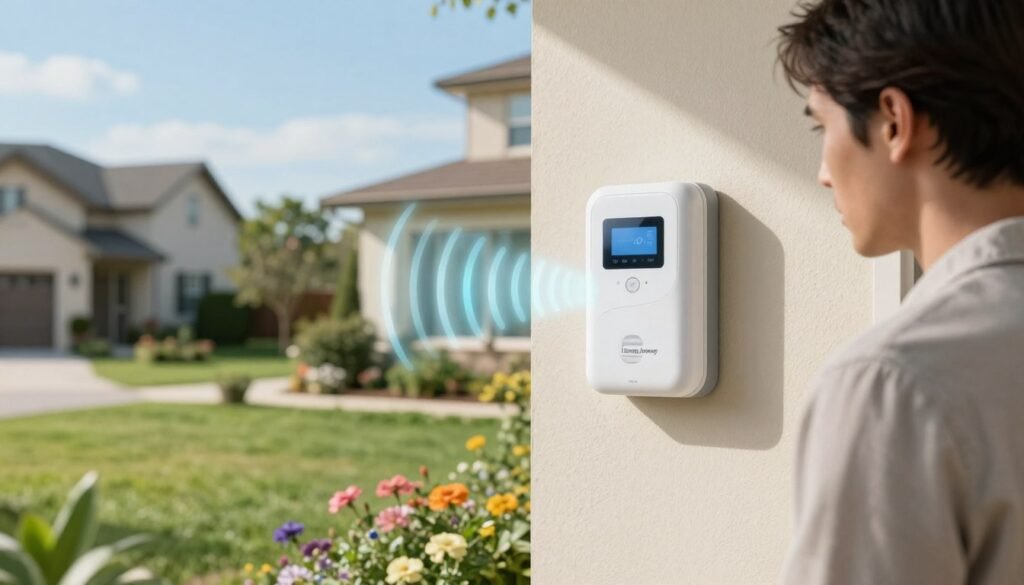
Technology is everywhere in our lives now. Smart meters are common in homes, making people wonder about EMF exposure. They help us track energy use. But, they also make some worry about EMF levels in our homes.
How Smart Meters Contribute to EMF Exposure
Smart meters send out radiofrequency EMF to talk to utility companies. How often and how strong depend on the meter and local setup. Even though one meter is low, many near each other can be a problem.
Regulatory groups like the FCC have rules for smart meters. They make sure these devices don’t emit too much energy. But for those who feel EMF effects strongly, knowing the risks is important.
Options for Consumers Concerned About Smart Meter EMF
If you worry about smart meter EMF, there are things you can do. Some companies let you turn off the wireless part or use a wire. This cuts down on EMF but might limit how you see your energy use.
You can also try EMF shielding materials or devices. But how well they work can vary. Always talk to EMF experts and check the latest studies before buying anything.
👉 Explore it here: https://emfshield.com/products/emf-defense-shield-for-phone-and-electronics-v2-1-2#aff=HealingHavenOasis
Conclusion: Balancing Modern Life and EMF Awareness
Living in today’s world means we need to know about EMFs. We must understand where they come from and how to limit our exposure. This helps us use technology wisely while keeping our health safe.
We’ve looked at where EMFs come from. They’re in the Earth’s magnetic field and in our homes and gadgets. The science behind EMFs is complex. But research keeps finding out how they might affect our health.
To stay safe, we can make our homes EMF-free zones. We can also control our smart devices and work on reducing EMFs at work. These actions help us avoid harmful electromagnetic fields and live healthier.
In the end, knowing about EMFs is important for our health. We can learn, control our exposure, and choose wisely. This way, we can enjoy technology without harming our well-being.
FAQ
What are electromagnetic fields (EMFs), and how are they related to my health?
Are all EMFs the same, or are there different types?
How can I measure EMF levels in my home or workplace?
What are some practical strategies to reduce EMF exposure in daily life?
Are there any international standards or guidelines for EMF safety?
How does 5G technology differ from previous wireless technologies in terms of EMF exposure?
Can EMF shielding products effectively reduce exposure?
Are there any specific populations that may be more susceptible to EMF effects?
How do smart meters contribute to overall EMF exposure, and what options are available for concerned consumers?
Disclaimer
The content shared on this page is for educational and informational purposes only. It is not intended to replace professional medical advice, diagnosis, or treatment. Always consult your healthcare provider before changing your current medical treatments, medications, or lifestyle.
Please note that individual results may vary. The approaches, products, and recommendations discussed may not have the same effects for everyone, as each individual’s circumstances and health needs are unique.
Additionally, some posts may contain affiliate links to Amazon or other websites. If you purchase through these links, we may earn a small commission at no extra cost. This supports the content we create and share with you.
Finally, some of the content on this page may have been influenced or created by Artificial Intelligence (AI) tools to enhance clarity, creativity, or efficiency.